
Self-improvementThe Wisdom of LifeArthur SchopenhauerTopFreeBooks
The Wisdom of Life
Arthur Schopenhauer
Why read it: The book itself: Schopenhauer's practical guide to what makes a life go well, in Saunders's free translation.

A note before you read the original: the text dates from the 1850s and contains racist, antisemitic and misogynistic passages. We do not repeat them here; we name them in What has aged badly. The Wisdom of Life is the most practical thing Arthur Schopenhauer wrote. The famously gloomy German philosopher sets his pessimism aside and asks a plain question: what actually makes a life go well? His answer splits everything into three parts, what a man is, what he has and how he stands in the eyes of others, and argues that the first matters far more than the other two. The English translation by T. Bailey Saunders is free and legal on Project Gutenberg, where it is titled The Essays of Arthur Schopenhauer: the Wisdom of Life. Below: how to get it, a chapter-by-chapter summary, the lines worth remembering, what has aged badly and what to read next.
On 4 November 2026 we downloaded the Project Gutenberg edition (#10741, plain text), checked its page for the licence, translator and file formats, read the book and searched the text to confirm every quotation below word for word and the chapter it sits in. Gutenberg does not give a date for the Saunders translation, so we do not state one. The 1851 date of the German original is from the Parerga und Paralipomena collection it first appeared in. The chapter summaries and the modern takeaways are ours.
Yes. Schopenhauer died in 1860 and T. Bailey Saunders, who made the English translation, died in 1928. Project Gutenberg marks this edition as public domain in the USA and has offered it free since 2004. Our book page, The Wisdom of Life, links straight to that copy.
Modern translations, such as E. F. J. Payne's version inside the complete Parerga and Paralipomena, are still in copyright, so a "free PDF" of a recent edition on a file-sharing site is not a legal copy. The Saunders translation is the free one, and it reads well.
On the Gutenberg page, choose EPUB3 for Apple Books, Google Play Books, Kobo and most reading apps; it is about 178 kB. For a Kindle, download the EPUB3 and send it with Amazon's Send to Kindle, or pick the Kindle file. Gutenberg does not offer a PDF, but you can open the HTML version and use Print > Save as PDF in your browser.
Searching for "Aphorisms on the Wisdom of Life"? That is the same work under a more literal title. Saunders published it simply as The Wisdom of Life.
In the Introduction, Schopenhauer opens with an honest warning. His own philosophy says a truly happy life is not really possible, so this book is "a compromise": he takes the everyday point of view and asks how to live as well as we can anyway. He calls that art eudaemonology, the theory of a happy existence.
Chapter I, "Division of the Subject", lays out the plan. Borrowing Aristotle's habit of dividing things into three, he sorts the differences between people's lives into: (1) what a man is, meaning health, strength, temperament, character, intelligence and education; (2) what a man has, meaning property and possessions; and (3) how he stands in the estimation of others, meaning reputation, rank and honour. The rest of the book argues one point: the first group decides your happiness far more than the other two.
He makes the case early, in Chapter I: "For what a man is in himself, what accompanies him when he is alone, what no one can give or take away, is obviously more essential to him than everything he has in the way of possessions, or even what he may be in the eyes of the world." He even says "a healthy beggar is happier than an ailing king".
| Part | What Schopenhauer includes | His verdict |
|---|---|---|
| What you are (chapter II) | Health, temperament, character, intellect, education | By far the most important, and the only part no one can take from you |
| What you have (chapter III) | Money, property, possessions | Useful as protection, but more of it brings less happiness than people expect |
| What you represent (chapter IV) | Reputation, pride, rank, honour, fame | Overrated: most worry about it is wasted |
Chapter II, "Personality, or What a Man Is", develops the point at length. Health comes first: Schopenhauer estimates that "nine-tenths of our happiness depends upon health alone." So, he concludes, "the greatest of follies is to sacrifice health for any other kind of happiness, whatever it may be, for gain, advancement, learning or fame."
Next is a cheerful temperament, and then an inner life rich enough to keep you company. He describes life as swinging between two enemies, "pain and boredom": poverty brings the first, comfort brings the second. The best defence against boredom is what he calls inward wealth, "the wealth of the mind", which is why he prizes reading, thinking and leisure used well over parties and constant entertainment. Quoting Epictetus, he reminds us that "Men are not influenced by things, but by their thoughts about things."
Schopenhauer is not anti-money. In his view, people love money because it can turn into whatever they want next. As he puts it, other goods are only "relatively good", while "Money alone is absolutely good, because it is not only a concrete satisfaction of one need in particular; it is an abstract satisfaction of all." But he warns that wanting more is a moving target: "Riches, one may say, are like sea-water; the more you drink the thirstier you become; and the same is true of fame." Whatever we get, our expectations rise to match, and the pleasure fades.
His most useful money advice is about capital. If you have savings, treat them "as a bulwark against the many evils and misfortunes" you may meet, not as permission to spend. He observes that people who earn well from a talent often treat the talent as their capital and every payment as spare interest, so they save nothing and are ruined when the talent goes out of fashion. People who inherit money, by contrast, usually know the difference between capital and interest and protect the capital. The lesson for anyone paid for a skill, from a freelancer to a footballer, is to build your own capital while the income lasts.
The longest chapter is a takedown of living for other people's opinion. "In all we do, almost the first thing we think about is, what will people say; and nearly half the troubles and bothers of life may be traced to our anxiety on this score;" His fix is a simple reminder: "every man's chief and real existence is in his own skin, and not in other people's opinions."
He then works through pride, rank, honour and fame. Ordinary honour, keeping your word and being trustworthy, he respects. He draws a neat line between the last two: "Fame is something which must be won; honor, only something which must not be lost." The "knightly honour" of his time, which demanded a duel over an insult, he attacks at length as a superstition. Modern readers can skim those pages; the rest of the chapter feels written for the age of social media.
All checked word for word against the Gutenberg text:
| Quote | Where |
|---|---|
| "a healthy beggar is happier than an ailing king" | Chapter I |
| "nine-tenths of our happiness depends upon health alone" | Chapter II |
| "the two foes of human happiness are pain and boredom" | Chapter II |
| "Riches, one may say, are like sea-water; the more you drink the thirstier you become; and the same is true of fame." | Chapter III |
| "every man's chief and real existence is in his own skin, and not in other people's opinions" | Chapter IV |
| "Fame is something which must be won; honor, only something which must not be lost." | Chapter IV |
The book carries prejudices common among educated Europeans of the 1850s, and some passages are offensive. In Chapter II he makes a racist remark about Black people. In Chapter IV he includes "millionaires and Jews" in a sneering list of people who win fame without merit, and elsewhere in the same chapter makes another antisemitic aside. His misogyny runs through Chapters III and IV.
Schopenhauer was a man of his time, and in places a sour one. On women and marriage, in Chapter III he claims women who were poor before marriage spend more freely, advises any man who marries a poor girl "not to leave her the capital but only the interest", and in Chapter IV lumps "women and priests" together as people to give "as little tether as possible". Read those lines as history, not advice.
He also writes mostly for well-off men with private incomes, and his idea of a good life leans heavily on solitude and the life of the mind. Not everyone wants that. Take the core ideas, health first, a rich inner life, savings as protection and less worry about status, and leave the snobbery behind.
1. Protect your health before your income or your image; he would call trading sleep for status a folly. 2. Build interests that keep you good company when you are alone. 3. Treat savings as a shield, not a spending budget, and keep some of every pay rise as capital. 4. Notice when you want more only because others have more. 5. Ask "what will people say?" less often, and "what do I actually think?" more.
For a calmer, ancient take on the same themes, pair it with Epictetus's The Enchiridion, which Schopenhauer quotes, or Aristotle's Nicomachean Ethics, whose division of goods he starts from.
Arthur Schopenhauer
Why read it: The book itself: Schopenhauer's practical guide to what makes a life go well, in Saunders's free translation.
Epictetus
Why read it: Epictetus's short Stoic handbook; Schopenhauer quotes his line about our thoughts about things.
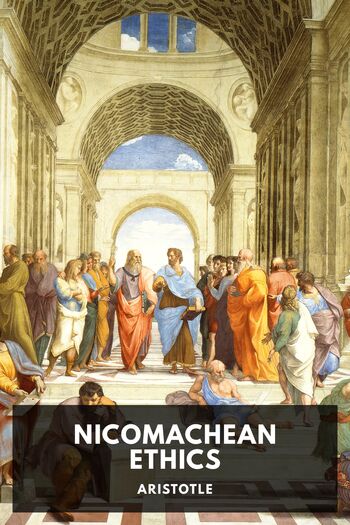
Aristotle · c. 340 BC; F. H. Peters translation, 1881
Why read it: Aristotle's classic on happiness and the good life, the starting point for Schopenhauer's three-way division.
Carl Hilty · 1903
Why read it: Carl Hilty's warmer, more hopeful essays on work, time and happiness from the same era.

Sir John Lubbock · Part I 1887, Part II 1889
Why read it: John Lubbock's cheerful Victorian answer to the same question: books, friends, health and time.

Marcus Aurelius · 1634 (Meric Casaubon translation)
Why read it: Marcus Aurelius's private notes on calm and character, the classic companion to any book on living well.
More on this topic: Self-improvement shelf.
Yes. The T. Bailey Saunders translation is public domain in the USA and free on Project Gutenberg (#10741) in EPUB, Kindle, plain text and online, with no signup. Our book page links to it.
Yes. Aphorismen zur Lebensweisheit is the German title, published in 1851 in Parerga und Paralipomena. Saunders translated it as The Wisdom of Life.
That what you are (health, temperament, character and mind) matters far more to your happiness than what you have (wealth) or how others see you (reputation, rank and fame).
That money is useful because it can meet any need, and savings should be a shield against misfortune. But more wealth brings less happiness than expected: "Riches, one may say, are like sea-water; the more you drink the thirstier you become."
This is his most practical book. He admits up front it is a compromise with his pessimism and gives everyday advice on health, temperament, money and status that many readers still find helpful.
About 38,000 words in the Gutenberg edition, roughly three hours. Chapters I to III are the most useful if you are short of time.
Read James Allen's As a Man Thinketh free and legally, with a summary of all 7 sections, the best quotes, and what holds up (and what does not) today.
Read Marcus Aurelius, Seneca and Epictetus free and legally: 5 public-domain Stoic classics, which to start with, and where each free copy comes from.

Read P. T. Barnum's The Art of Money Getting free and legally, with all 20 of his golden rules summarised, the best quotes and what has aged badly.
See all posts →Every TopFreeBooks guide and reading list in one place.
General information only. Public-domain status is for the USA, so check your own country. We never host files; every link goes to the official source.